In today’s fast-evolving industrial Valves Manufacturer world, one size no longer fits all. Every process — whether in oil & gas, power generation, pharmaceuticals, or chemical manufacturing — presents unique flow control challenges. When standard valves fall short of meeting extreme temperature, pressure, or media conditions, custom valve solutions step in as the ultimate answer.
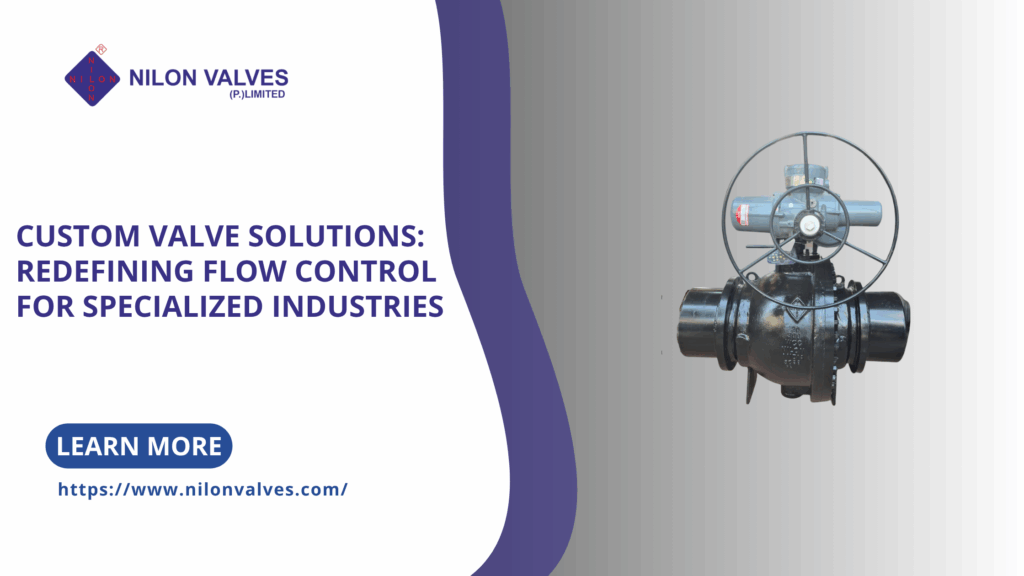
Custom-engineered valves are more than just modified components; they are precision-built systems designed to match specific operational, safety, and performance needs. As industries push the boundaries of innovation, the demand for specialized valve designs is redefining how we think about reliability, efficiency, and engineering excellence.
Why Custom Valves Matter in Modern Industry
Valves may be small in size compared to other industrial equipment, but their role is enormous — they control, isolate, and protect the lifeblood of any system: the flow. However, no two applications are exactly alike. A valve that performs flawlessly in a water treatment plant might fail under cryogenic LNG conditions or corrosive chemical processes.
That’s where customization becomes crucial.
1. Performance Beyond Standards
Standard valves are designed for generalized service conditions. But industries like hydrogen production, subsea operations, or pharmaceutical processing demand much tighter tolerances and performance benchmarks. Custom valves are optimized for:
- Precise pressure and temperature ranges
- Extended service life and minimal leakage
- Compliance with niche standards (API, ASME, ISO, etc.)
2. Operational Efficiency and Reliability
A custom valve can dramatically improve a system’s reliability by eliminating performance mismatches. When engineered to specific parameters, it reduces wear, leakage, and energy losses — ensuring smoother operations and longer maintenance intervals.
3. Safety and Compliance
Safety is non-negotiable in high-risk environments. Custom valves integrate enhanced sealing technologies, redundant safety systems, and fail-safe actuation mechanisms, ensuring compliance with local and international safety standards.
Key Industries Driving the Demand for Custom Valves
Oil & Gas
With Deepwater drilling, sour gas, and extreme temperature operations, the oil and gas sector requires valves capable of handling high-pressure, corrosive, and abrasive media. Custom solutions include:
- Metal-seated ball valves for high-temperature service
- Subsea control valves designed for 10,000+ PSI pressure
- Custom alloys like Inconel, Duplex, and Super Duplex for corrosion resistance
Chemical & Petrochemical
In this industry, even a minor leak can have major consequences. Custom valve designs often feature:
- Special coatings and linings (PTFE, PFA, rubber) to handle acids and solvents
- Precise flow control mechanisms for batch processing
- Fire-safe certifications to ensure fail-proof safety
Power Generation
From conventional power plants to nuclear and renewable systems, valves must withstand high steam pressures and temperatures. Examples include:
- Custom globe valves with reinforced stems
- Pressure-seal bonnets for elevated pressure containment
- Specialized materials for supercritical and ultra-supercritical applications
Water Treatment & Desalination
In water and wastewater systems, valves must resist scaling and corrosion while ensuring long life. Custom valves may include:
- Epoxy-coated or duplex stainless steel materials
- Actuated control systems for automated flow management
- High-cycle life designs for continuous operation
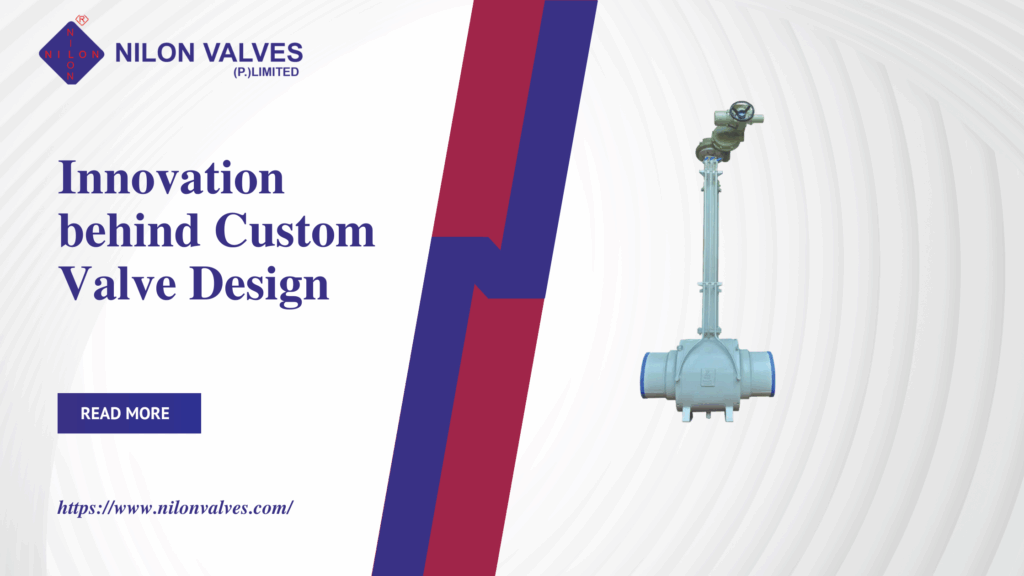
Innovation behind Custom Valve Design
The process of engineering a custom valve combines mechanical innovation, material science, and digital design technologies.
1. Advanced Simulation & Prototyping
Modern CAD and FEA (Finite Element Analysis) tools allow engineers to simulate pressure, stress, and flow dynamics before manufacturing. This minimizes trial-and-error, reduces lead time, and ensures the final valve performs exactly as intended.
2. Additive Manufacturing (3D Printing)
3D printing is transforming valve prototyping and even production. Manufacturers can now create complex geometries, internal channels, and lightweight components that traditional casting or forging cannot achieve.
3. Smart & IoT Integration
Custom valves can now be equipped with sensors that monitor pressure, temperature, vibration, and flow in real time. These smart features enable predictive maintenance and integration with SCADA or Industry 4.0 systems, reducing downtime and improving efficiency.
4. Sustainable Materials and Design
The move toward eco-friendly production has inspired innovation in materials. Recyclable alloys, low-emission coatings, and energy-efficient actuation systems are becoming standard in new custom valve designs.
The Customization Process: From Concept to Commissioning
Creating a custom valve solution isn’t a quick modification — it’s a collaborative engineering process that involves close coordination between manufacturer and client.
1. Application Assessment
The process begins with a detailed study of the application — fluid type, operating conditions, safety requirements, and space constraints. Engineers analyze flow rates, pressure drops, and system compatibility.
2. Design & Engineering
Based on specifications, the valve is designed using advanced CAD tools. Simulation ensures that every component — body, trim, seals, and actuator — meets performance targets.
3. Material Selection
Choosing the right material is vital. Corrosion resistance, temperature tolerance, and mechanical strength dictate material choice — from stainless steels to exotic alloys like Hastelloy or Monel.
4. Prototype & Testing
Before full production, prototypes undergo hydrostatic, pneumatic, and functional testing to validate performance. In some cases, third-party inspection and certification are required.
5. Manufacturing & Quality Assurance
Precision machining, controlled assembly, and non-destructive testing (NDT) ensure the highest level of quality. Every valve is serialized for traceability and documentation.
6. Delivery & After-Sales Support
Post-delivery, many manufacturers provide on-site installation support, training, and maintenance schedules to ensure long-term reliability.
Future Outlook: The Next Era of Custom Valve Engineering
As global industries evolve, customization will become the new standard. The future of valve manufacturing lies in:
- Digital twins for virtual testing and performance tracking
- AI-driven predictive maintenance for reliability management
- Modular valve systems for faster configuration and replacement
- Sustainable designs aligned with net-zero manufacturing goals
Manufacturers that embrace these technologies and collaborate closely with clients will lead the next wave of industrial innovation.
Conclusion
Custom valve solutions are not just about meeting technical specifications — they’re about engineering trust, precision, and performance into every flow control challenge. Whether it’s managing extreme pressures in an offshore rig or ensuring sterile flow in a pharmaceutical plant, customized valves redefine reliability where standard designs fall short.
As industries continue to innovate, the partnership between manufacturers and end-users becomes vital. Together, they can push boundaries, solve complex flow challenges, and build the next generation of intelligent, efficient, and sustainable valve systems.
Also Read: Global Valve Market Outlook 2025–2030 — Opportunities, Risks & What Manufacturers Need to Do Now