Gate valves have long been a fundamental component in industrial flow control systems. Known for their ability to provide a tight shut-off and minimal pressure drop when fully open, these valves are widely used across industries such as oil and gas, power generation, water treatment, chemical processing, and manufacturing. However, with industries evolving and operational demands increasing, traditional valve designs are no longer sufficient to meet modern performance expectations.
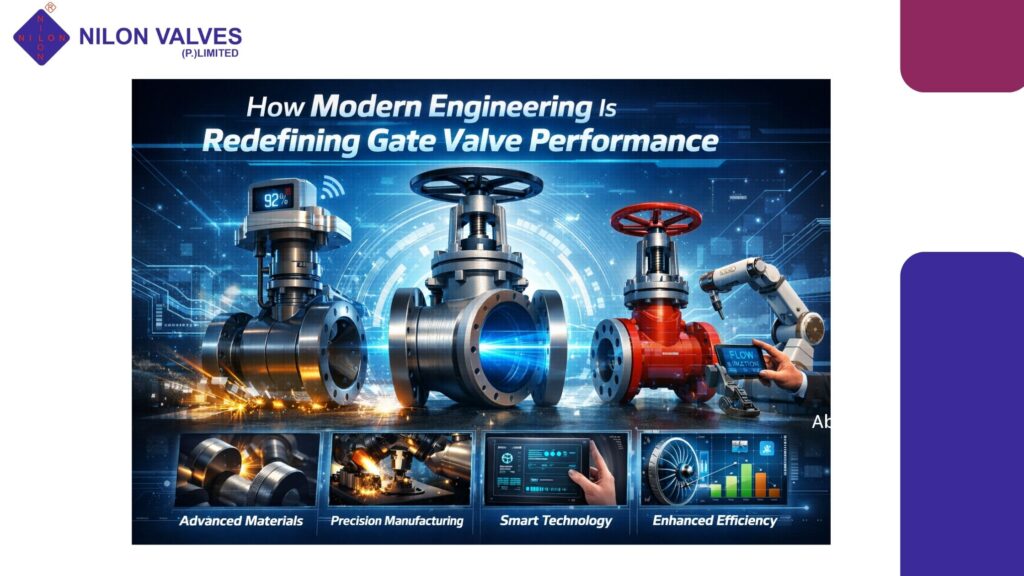
Today, modern engineering innovations are transforming the design, manufacturing, and functionality of gate valves. Advanced materials, precision manufacturing techniques, smart monitoring technologies, and improved sealing mechanisms are significantly enhancing the performance, reliability, and efficiency of gate valves in demanding industrial environments.
Understanding Gate Valves and Their Role in Industry
A gate valve is a type of valve that uses a sliding gate or wedge mechanism to start or stop the flow of fluid. When the valve is fully open, the gate is completely lifted out of the flow path, allowing unrestricted flow with minimal resistance.
Gate valves are widely preferred in industries because they offer several advantages:
- Excellent shut-off capability
- Minimal pressure drop when open
- Long service life
- Suitable for high-pressure and high-temperature applications
- Reliable performance in critical systems
Despite these advantages, traditional valve designs often faced challenges such as wear and tear, leakage, slow operation, and maintenance requirements. Modern engineering solutions are addressing these issues by improving design efficiency and material strength.
Advanced Materials Improving Gate Valve Durability
One of the most significant engineering improvements in modern gate valves is the use of advanced materials. Traditional valves were primarily manufactured using standard cast iron or basic steel alloys. While these materials were effective, they sometimes struggled to withstand extreme temperatures, corrosive chemicals, and high-pressure environments.
Today’s modern gate valves utilize high-performance materials such as:
- Stainless steel alloys
- Duplex and super duplex stainless steel
- High-performance polymers and elastomers
- Corrosion-resistant coatings
These materials enhance the valve’s ability to withstand harsh operating conditions. For example, duplex stainless steel provides superior resistance to corrosion and stress cracking, making it ideal for marine and chemical applications.
Precision Manufacturing and CNC Technology
Modern engineering has introduced precision manufacturing techniques, including CNC machining and automated quality control processes. These technologies ensure that every gate valve component is manufactured with extremely high accuracy.
Key benefits of precision manufacturing include:
- Perfect sealing surfaces
- Improved alignment of internal components
- Reduced friction during operation
- Higher reliability and consistency in performance
CNC technology allows manufacturers to produce complex valve components with micron-level precision. This level of accuracy significantly reduces the risk of leakage and operational failure.
Enhanced Sealing Technologies
Sealing performance is one of the most critical aspects of any industrial valve. Even a small leak can result in safety hazards, environmental damage, and costly operational downtime.
Modern engineering has introduced advanced sealing technologies that improve the reliability of gate valves. These include:
- Soft-seated sealing systems
- Metal-to-metal sealing designs
- High-performance gasket materials
- Advanced packing systems
Soft-seated gate valves use elastomer or polymer materials that create a tight seal even under varying pressure conditions. Metal-seated designs, on the other hand, are ideal for high-temperature and abrasive environments.
Smart Valves and Digital Monitoring
One of the most exciting developments in modern valve engineering is the integration of smart technologies. Digital monitoring systems are now being incorporated into industrial valves to enhance operational visibility and control.
Smart gate valves can include features such as:
- Sensors to monitor pressure and temperature
- Real-time flow monitoring
- Remote operation capabilities
- Predictive maintenance alerts
These technologies allow operators to monitor valve performance in real time and identify potential issues before they lead to system failures.
Automation and Actuated Gate Valves
Modern industries increasingly rely on automation to improve productivity and safety. Gate valves are now frequently equipped with electric, pneumatic, or hydraulic actuators that allow remote or automated operation.
Automated gate valves offer several advantages:
- Faster operation compared to manual valves
- Improved safety in hazardous environments
- Reduced human intervention
- Better integration with industrial control systems
Applications of Modern Gate Valves
Modern gate valves are widely used across many industries due to their enhanced performance and reliability.
Key industries include:
- Oil and gas pipelines
- Water treatment and distribution
- Power plants
- Chemical processing facilities
- Manufacturing industries
In each of these sectors, gate valves play a crucial role in maintaining safe and efficient fluid control systems.
Also Read: The Role of Advanced Technology in Modern Valve Manufacturing
Conclusion
Gate valves remain a critical component in industrial flow control systems, but their performance is being significantly enhanced by modern engineering innovations. From advanced materials and precision manufacturing to smart monitoring technologies and automation, these developments are redefining how gate valves operate in demanding environments.
Modern gate valves offer improved durability, better sealing performance, higher efficiency, and enhanced operational reliability. As industries continue to demand greater efficiency and sustainability, engineering advancements will further transform the design and functionality of gate valves.