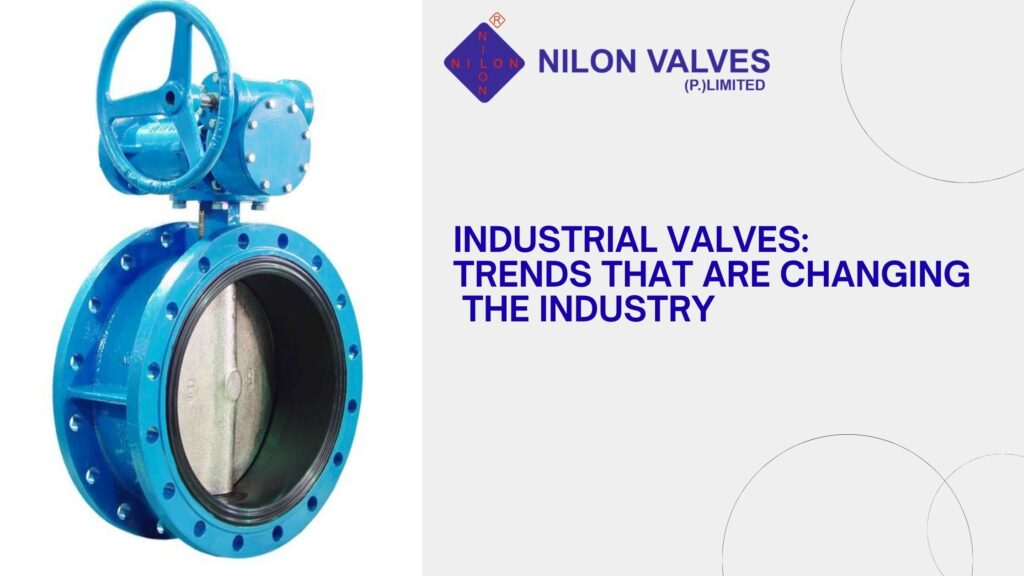
The industrial valve industry is evolving rapidly as global industries demand higher efficiency, safety, and sustainability. From oil & gas and power generation to chemical processing and water treatment, valves play a critical role in controlling flow, pressure, and safety. Today, innovation in design, materials, and digital technology is reshaping how industrial valves are manufactured and used.
Let’s explore the key trends that are transforming the industry—and how essential products like ball valves and butterfly valves are adapting to these changes.
1. Rise of Smart and Automated Valves
Automation and digitalization are becoming standard across industrial operations. Smart valves integrated with sensors and actuators provide real-time data on flow conditions, pressure, and valve health.
- Automated ball valves are increasingly used in critical applications due to their tight shut-off and reliability.
- Butterfly valves, when combined with smart actuators, offer efficient flow control in large-diameter pipelines.
This shift helps industries reduce downtime, improve safety, and optimize operational efficiency.
2. Sustainability & ESG Driving Valve Design
Environmental, Social, and Governance (ESG) goals are influencing purchasing decisions across industries. Valve manufacturers are focusing on designs that reduce leakage, emissions, and energy consumption.
- Low-emission ball valves help meet strict environmental regulations in oil & gas and chemical plants.
- Lightweight butterfly valves reduce material usage while maintaining high performance, supporting sustainable infrastructure projects.
Sustainability is no longer optional—it’s a competitive advantage.
3. Advanced Materials for Harsh Applications
Industrial environments are becoming more demanding, requiring valves that can withstand extreme temperatures, high pressures, and corrosive media.
- Ball valves are now manufactured using advanced alloys and special coatings to enhance durability.
- Butterfly valves are benefiting from improved elastomers and corrosion-resistant linings for longer service life.
These material innovations significantly reduce maintenance costs and extend valve lifespan.
Conclusion
The industrial valve industry is undergoing a major transformation driven by automation, sustainability, advanced materials, and smarter maintenance strategies. Core products like ball valves and butterfly valves continue to evolve, meeting modern industry demands for performance, safety, and efficiency.
Manufacturers that embrace these trends are not just supplying valves—they are delivering future-ready flow control solutions that power global industries.
Also Read: Top Export Opportunities for Valve Manufacturers in 2026