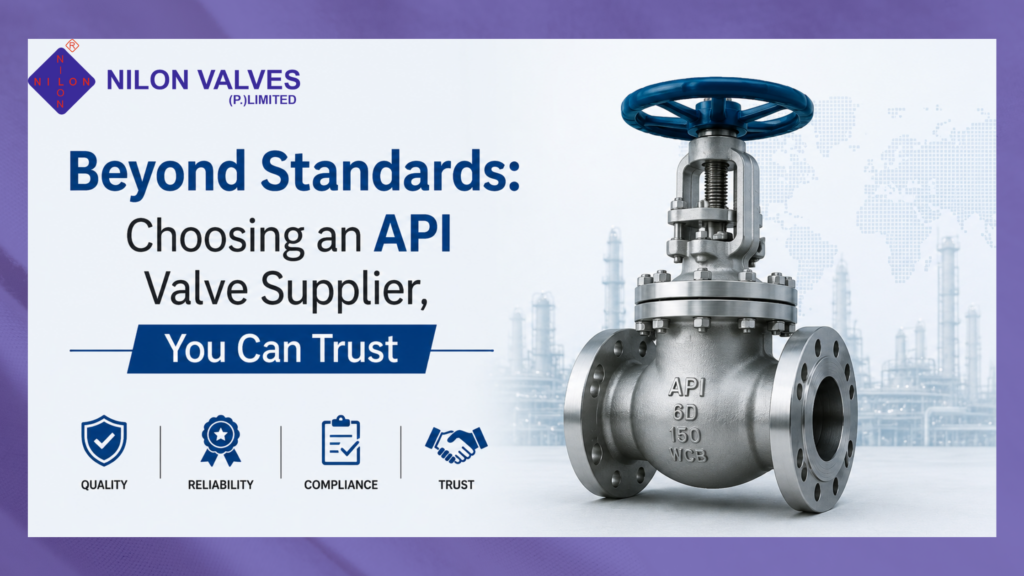
An API-certified valve is more than just a product—it represents quality, safety, durability, and compliance with globally recognized standards. But with countless suppliers available in the market, how do you identify an API valve supplier you can truly trust?
This guide explores the essential factors industries should consider when selecting a reliable API valve supplier and why quality should always go beyond standards.
Understanding API Standards in Industrial Valves
The term API stands for the American Petroleum Institute, an internationally recognized organization that establishes strict standards for industrial equipment, especially in the oil, gas, and energy sectors.
API standards ensure valves are manufactured to withstand extreme pressure, temperature, and operational conditions while maintaining maximum efficiency and safety.
Common API standards for valves include:
- API 6D for pipeline valves
- API 600 for steel gate valves
- API 602 for compact steel gate, globe, and check valves
- API 608 for metal ball valves
- API 598 for valve inspection and testing
These certifications indicate that the valve has been manufactured and tested according to globally accepted performance benchmarks.
Why Choosing the Right API Valve Supplier Matters
Not every supplier offering API valves delivers the same level of quality and reliability. A trusted supplier does more than simply sell products—they become a long-term industrial partner.
1. Guaranteed Product Quality
A reliable API valve supplier prioritizes strict quality control at every stage of manufacturing. From raw material selection to machining, assembly, and testing, every valve should undergo rigorous inspection.
High-quality API valves offer:
- Longer service life
- Improved operational efficiency
- Leak-proof sealing
- Reduced maintenance costs
- Better resistance to corrosion and pressure
2. Compliance with Global Certifications
A trusted API valve supplier ensures products meet international industry standards and certifications.
Look for suppliers that comply with:
- API Standards
- ISO Certifications
- ASME Standards
- ANSI Specifications
- Fire Safe Certifications
3. Wide Range of Valve Solutions
Industrial applications vary significantly, which means one valve type cannot serve every purpose. An experienced API valve supplier offers a comprehensive portfolio of products to meet diverse operational requirements.
Typical offerings include:
- Ball Valves
- Gate Valves
- Globe Valves
- Check Valves
- Cryogenic Valves
- Trunnion Mounted Ball Valves
- Metal Seated Valves
- High-Pressure Industrial Valves
4. Strong Manufacturing Capabilities
The best API valve suppliers invest in advanced manufacturing technologies to maintain consistency and precision.
Key manufacturing strengths to look for include:
- CNC Precision Machining
- Automated Welding Systems
- In-House Testing Facilities
- Inconel Weld Overlay Capabilities
- Advanced Surface Treatment Processes
Modern production infrastructure directly impacts valve quality and performance.
Key Factors to Evaluate Before Choosing an API Valve Supplier
Industry Experience & Reputation
A supplier with years of experience in industrial valve manufacturing typically has stronger technical expertise and a proven track record.
Evaluate:
- Years in operation
- Export capabilities
- Client portfolio
- Industry reputation
- Case studies or project experience
Quality Testing Procedures
A reliable API valve supplier conducts comprehensive testing before delivery.
Important tests include:
- Hydrostatic Testing
- Pneumatic Testing
- NDT (Non-Destructive Testing)
- PMI Testing
- Leakage Testing
- Pressure Performance Testing
Customization Capabilities
Every industrial project comes with unique operational requirements. Trusted suppliers provide customization options including:
- Valve material grades
- Pressure ratings
- Size modifications
- End connection types
- Coating requirements
Global Supply & Timely Delivery
Delays in industrial projects can be costly. A dependable API valve supplier should have a strong supply chain and export capability to ensure timely delivery across global markets.
Fast response times, professional logistics support, and proper documentation are signs of a supplier you can trust.
Industries That Depend on API Valves
API-certified valves are essential across multiple industries including:
- Oil & Gas Processing
- Refineries
- Petrochemical Plants
- LNG Facilities
- Power Generation Plants
- Chemical Manufacturing
- Water Treatment Systems
- Offshore & Marine Operations
These industries demand equipment capable of handling extreme operational conditions without compromise.
Why Trust Matters Beyond Standards
While API certification is essential, trust goes beyond compliance. The best API valve supplier combines certified quality with technical expertise, customer support, advanced manufacturing, and long-term reliability.
A trusted supplier becomes an extension of your operations—helping minimize risks, improve productivity, and ensure uninterrupted industrial performance.
Conclusion
Choosing an API valve supplier is a strategic investment that directly impacts operational efficiency, safety, and long-term reliability. While API certifications provide a strong foundation, industries should focus on suppliers with proven expertise, advanced manufacturing capabilities, stringent testing procedures, and a strong reputation in global markets.